
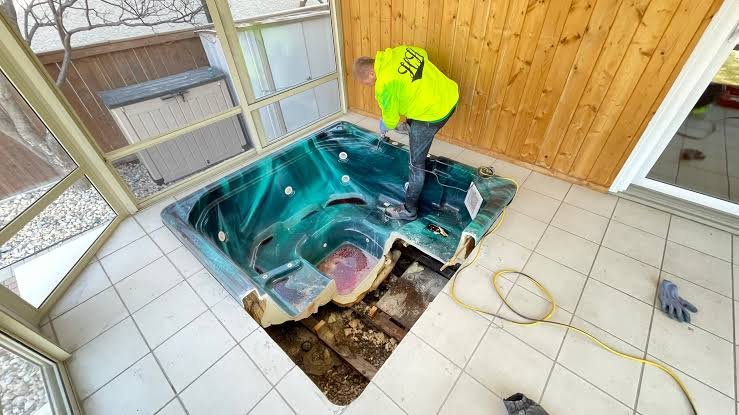
Hot tub removal is more involved than carrying an old spa to the curb. These bulky structures can contain heavy framing, electrical components, plumbing, and insulation. Junk Rescue AZ helps homeowners approach the process with a practical focus on safe removal, efficient hauling, and responsible disposal.
Whether replacing an outdated spa or reclaiming patio space, understanding the process can help you avoid damage, injuries, and disposal problems.
Why Hot Tub Removal Requires Planning
A hot tub may look like one large object, but it contains multiple materials and systems. Depending on its design and age, a spa can include an acrylic or fiberglass shell, wood or composite framing, foam insulation, pumps, heaters, wiring, pipes, and metal hardware.
Its size and weight create challenges, especially when it must pass through gates or around landscaping. Before starting, consider the spa’s size, removal route, nearby structures, utility connections, and local disposal requirements.
How to Prepare for Hot Tub Removal
Proper preparation is important when removing an old spa. Rushing into demolition can create avoidable hazards.
1. Disconnect the Power
Electrical components should be addressed before physical dismantling begins. Hot tubs may be connected to dedicated circuits, disconnect boxes, or other equipment.
Do not assume that turning off the spa’s controls makes the system safe. Electrical connections should be shut off and handled appropriately before removal begins. If you are unsure how the unit is wired, have a qualified professional disconnect it safely.
2. Drain the Tub Completely
Water adds substantial weight to an already heavy structure. Drain the hot tub completely before attempting to dismantle or move it.
Allow residual water to escape from plumbing and other areas where it may collect. Follow the manufacturer’s instructions and applicable local requirements for drainage.
3. Clear the Work Area
Remove furniture, decorations, planters, toys, and other objects surrounding the spa. A clear work zone gives workers more room to maneuver materials and reduces trip hazards.
Examine the route to the loading area. Narrow gates, steps, walls, trees, and delicate landscaping can affect how the spa should be dismantled.
4. Protect the Property
Hot tub removal involves heavy materials and sharp edges. Take precautions to protect nearby flooring, walls, fences, landscaping, and other property.
If the spa sits on a deck, inspect the structure before moving heavy components across it. An old or damaged deck may not safely support workers, equipment, and dismantled materials.
Hot Tub Dismantling: What Usually Happens?
An intact hot tub may be too large to move efficiently. Dismantling it into manageable sections can make transportation easier.
Depending on the construction, removal may involve separating:
- Exterior panels and framing
- Plumbing, pumps, and equipment
- Electrical components
- Insulation
- The main shell
- Metal brackets and hardware
The shell is often the most challenging component because it is bulky, rigid, and awkward to carry. Cutting or breaking it into smaller pieces may be necessary when it cannot pass through an access point.
Demolition also creates hazards. Fiberglass, acrylic, insulation, metal, and broken structural materials can produce sharp edges or airborne particles. Appropriate protective equipment and safe handling practices are important throughout the process.
Should You Remove a Hot Tub Yourself?
DIY hot tub removal may appear attractive because it can reduce labor costs. However, the project becomes more complicated when the spa is large, difficult to access, or connected to electrical equipment.
Consider professional removal when:
- The hot tub is exceptionally large or heavy
- Access to the yard is limited
- Electrical connections are complicated
- The unit is built into a deck
- You lack suitable hauling equipment
- Several people would be needed to move the shell
- You are concerned about damaging the property
What Happens to an Old Hot Tub After Removal?
Hot tub disposal can be more complicated than placing the entire unit into a standard waste container. Components may need to be separated according to their material and condition.
Some materials may have recycling or reuse potential. Metals, for example, can sometimes be recovered, while certain equipment components may be reusable if they remain in suitable condition. Damaged shells, insulation, and composite components may require appropriate waste handling.
Separating materials when practical can reduce unnecessary landfill volume and improve recovery of reusable materials.
Hot Tub Removal and Property Improvements
Removing an unwanted spa can create space for seating, a garden, dining area, fire pit, or additional patio space.
Before deciding what comes next, inspect the surface beneath the old hot tub. Years of moisture and concentrated weight can affect decking, concrete, pavers, or surrounding landscaping.
How to Make Hot Tub Removal More Efficient
Check Access
Measure gates, pathways, and narrow access points. This helps determine whether the shell must be dismantled before removal.
Plan Disposal and Secure the Area
Decide in advance whether materials will be recycled, reused, transported to a disposal facility, or handled by a removal service. Keep children and pets away from dismantled materials until removal and cleanup are complete.
Common Hot Tub Removal Mistakes
Several mistakes can make an otherwise straightforward project more difficult.
Trying to move the entire hot tub intact: A large spa may be too heavy and awkward to transport safely without dismantling it.
Ignoring electrical connections: Beginning demolition before power has been safely disconnected can create a serious hazard.
Underestimating access issues: A spa that fits in an open backyard may not fit through a narrow gate or passageway.
Leaving debris behind: Removing the shell while leaving insulation, framing, plumbing, and other components can create additional cleanup work.
Failing to protect surfaces: Heavy materials can scratch floors, damage landscaping, or affect decking when moved carelessly.
Avoiding these problems starts with treating removal as a complete project rather than a single lifting task.
When It Is Time to Remove an Old Hot Tub
Repairs or refurbishment may make sense when the shell and major components remain in good condition.
Removal becomes more practical when the unit has persistent leaks, structural deterioration, outdated equipment, severe cosmetic damage, or repair costs that no longer make financial sense.
Removal can also make sense when the hot tub is no longer being used. A large spa that sits unused still occupies valuable outdoor space and may require ongoing maintenance.
A Cleaner Approach to Hot Tub Removal
Successful hot tub removal combines preparation, safe dismantling, efficient hauling, and responsible disposal. Homeowners should consider the entire process before work begins, especially when dealing with heavy components, electrical systems, restricted access, or fragile property features.
Once the spa and associated debris are gone, the space can be cleaned and prepared for its next purpose.
For homeowners who want a practical way to remove an unwanted spa without managing every stage themselves, Junk Rescue AZ offers a convenient option for hot tub removal and associated cleanup. With proper planning and responsible disposal, getting rid of an old hot tub can be a straightforward step toward creating a safer, cleaner, and more usable outdoor space.